
Artificial intelligence is no longer a futuristic concept. It now sits at the heart of modern innovation. Businesses, startups, and governments use it to automate processes, predict trends, and make smarter decisions.
Yet many organizations struggle with one simple problem. They don’t know where to start That’s where an AI Blueprint becomes essential.
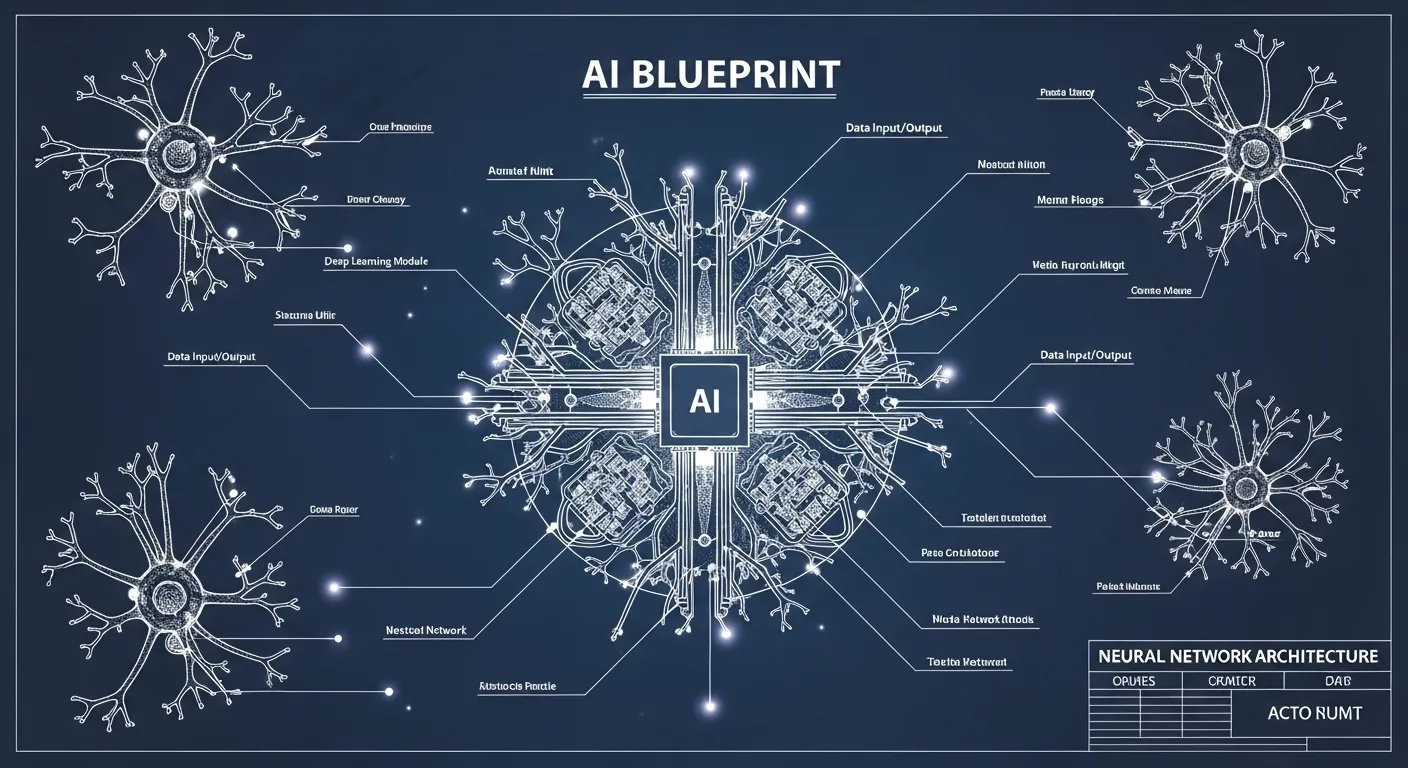
Think of an Artificial Intelligence Blueprint as a strategic map. It outlines how your organization will design, build, deploy, and scale AI solutions. Without this structure, AI projects often collapse under poor planning, weak data systems, or unclear goals.
This guide explains how to build an AI blueprint step by step. You’ll learn about AI architecture, AI strategy, AI frameworks, data pipelines, machine learning models, deployment strategies, and enterprise AI planning.
By the end, you’ll have a clear roadmap for launching intelligent systems that actually deliver results.
What Is an AI Blueprint and Why It Matters
An AI Blueprint is a structured plan that guides the design, development, and deployment of artificial intelligence systems.
It connects business goals with technology. Instead of randomly experimenting with AI tools, organizations follow a defined AI Strategy Blueprint that aligns innovation with real outcomes.
A well-designed AI System Blueprint usually includes:
- AI system architecture
- AI infrastructure setup
- AI model development lifecycle
- AI deployment strategy
- AI governance policies
- AI lifecycle management
In simple terms, it answers four big questions:
| Question | What It Defines |
|---|---|
| What problem are we solving? | Business objective |
| What AI technology do we use? | Tools and models |
| How will we build it? | Architecture and workflow |
| How will we manage it? | Governance and monitoring |
Without a blueprint, AI projects drift. Teams waste money on tools that don’t solve real problems. However, a structured AI Implementation Blueprint creates clarity.
Core Components of a Successful AI Blueprint
Every effective AI Development Blueprint follows a layered architecture. Each layer supports the next.
These components work together to transform raw data into intelligent systems.
Key Layers of an AI System Blueprint
| Layer | Description |
|---|---|
| Data Layer | Data pipelines, preprocessing, storage |
| Model Layer | Machine learning and neural networks |
| Infrastructure Layer | Cloud, GPUs, distributed computing |
| Application Layer | AI-powered apps and automation |
| Governance Layer | Ethics, compliance, monitoring |
Let’s explore these pieces in more depth.
Data Foundation
Artificial intelligence runs on data. Without high-quality datasets, even the best algorithms fail.
A strong AI data pipeline architecture includes:
- Data preprocessing
- Feature engineering
- Training datasets
- Real-time data ingestion
Model Development
At this stage, engineers build machine learning models using frameworks like:
- Deep Learning systems
- Neural Networks
- Predictive Analytics models
- Natural Language Processing models
Infrastructure Setup
AI requires powerful computing resources.
Organizations typically rely on:
- Cloud GPU clusters
- Distributed computing systems
- Data warehouses
- AI model serving platforms
This environment forms the backbone of the AI Technology Stack.
How to Build an AI Blueprint Step by Step

Creating a structured AI Implementation Guide involves multiple phases. Each phase moves from strategy toward execution.
Step 1: Define Business Objectives
The first step in AI project planning involves identifying the real business challenge.
Examples include:
- Customer service automation
- Fraud detection
- Predictive sales forecasting
- Intelligent supply chain optimization
Organizations should focus on high-impact problems.
Tip: Start with problems where AI can increase efficiency or reduce costs.
Step 2: Develop an AI Strategy
An effective Enterprise AI Strategy outlines how artificial intelligence supports long-term growth.
Key elements include:
- AI investment priorities
- Innovation goals
- Technology partnerships
- Talent development
This becomes the core of your AI Innovation Strategy.
Step 3: Design the AI Architecture
Next comes AI architecture design.
Engineers define the system components including:
- Data pipeline
- Model training environments
- AI infrastructure
- Deployment environments
Here is a simplified diagram of AI system architecture design.
Data Sources
     ↓
Data Pipeline
     ↓
Feature Engineering
     ↓
Machine Learning Models
     ↓
Model Evaluation
     ↓
Deployment API
     ↓
Applications / Automation Systems
Each step ensures the system remains scalable and reliable.
Step 4: Build the AI Development Roadmap
The AI development roadmap outlines milestones and deliverables.
Typical phases include:
| Phase | Focus |
|---|---|
| Research | Data exploration |
| Prototype | Model experiments |
| Development | Production model |
| Deployment | Integration |
| Monitoring | Continuous improvement |
This roadmap prevents projects from stalling halfway.
Understanding the AI Technology Stack
A robust AI Technology Blueprint requires the right combination of tools and platforms.
These tools form the backbone of AI development.
AI Development Stack
| Layer | Example Tools |
|---|---|
| Data Engineering | Spark, Hadoop |
| Machine Learning | TensorFlow, PyTorch |
| NLP Tools | SpaCy, HuggingFace |
| Computer Vision | OpenCV |
| Model Deployment | Docker, Kubernetes |
| Monitoring | MLflow |
Each layer supports different parts of the AI Model Development Lifecycle.
Key Technologies Powering AI
The modern Artificial Intelligence Blueprint relies on several core technologies.
Machine Learning
Machine Learning enables systems to learn patterns from data.
Applications include:
- Recommendation engines
- Fraud detection
- Predictive analytics
Deep Learning
Deep Learning models use layered neural networks to analyze complex data like images and speech.
Examples include:
- voice assistants
- medical imaging analysis
- autonomous vehicles
Natural Language Processing
Natural Language Processing allows machines to understand human language.
Popular NLP applications include:
- chatbots
- sentiment analysis
- document summarization
Computer Vision
Computer Vision enables AI to interpret visual data.
It powers:
- facial recognition
- quality inspection systems
- retail analytics
Designing an AI Data Pipeline
An efficient Data Pipeline ensures smooth data flow from collection to model deployment.
The pipeline usually includes several stages.
Stages of an AI Data Pipeline
| Stage | Description |
|---|---|
| Data Collection | Gather structured and unstructured data |
| Data Preprocessing | Clean and normalize data |
| Feature Engineering | Extract meaningful patterns |
| Model Training | Train algorithms |
| Model Evaluation | Validate performance |
A reliable AI workflow design prevents data bottlenecks.
Common Data Challenges
Organizations often face these issues:
- Incomplete datasets
- Poor data governance
- Unstructured information
- Data privacy risks
Solving these problems requires strong Data Governance policies.
AI Model Development Lifecycle
Building AI systems requires structured processes.
The AI model development lifecycle includes several phases.
Model Development Stages
- Algorithm selection
- Model training
- Model evaluation
- Model deployment
- Model monitoring
Each phase contributes to the overall AI Lifecycle Management process.
Example: Predictive Sales Model
Imagine an online retailer building a Predictive Analytics system.
The development process might look like this:
| Step | Action |
|---|---|
| Data Collection | Customer purchase history |
| Feature Engineering | Buying frequency |
| Algorithm Selection | Gradient boosting |
| Model Training | Train on historical data |
| Model Evaluation | Measure accuracy |
| Deployment | API for recommendations |
This pipeline transforms raw data into real business intelligence.
AI Deployment Strategy and Integration

After development, the system must integrate into real business workflows.
A strong AI Deployment Strategy ensures smooth adoption.
Deployment Methods
| Method | Description |
|---|---|
| Cloud Deployment | Scalable infrastructure |
| Edge AI | Real-time processing |
| Hybrid Deployment | On-premise + cloud |
Most modern companies choose cloud-based AI infrastructure.
AI Integration Strategy
Integration involves connecting AI with existing software.
Common integration targets include:
- CRM platforms
- ERP systems
- marketing automation tools
- analytics dashboards
This creates a seamless AI workflow design across departments.
AI Governance, Ethics, and Responsible AI
AI offers powerful capabilities. However, it also raises ethical concerns.
Organizations must implement strong AI Governance policies.
Key Governance Areas
- Data governance
- Model transparency
- Bias detection
- Regulatory compliance
Responsible AI ensures technology benefits society without causing harm.
“Artificial intelligence must align with human values and ethical principles.”
AI Ethics Principles
| Principle | Purpose |
|---|---|
| Fairness | Prevent algorithm bias |
| Transparency | Explain decisions |
| Privacy | Protect user data |
| Accountability | Define responsibility |
Responsible AI improves public trust.
AI Blueprint for Businesses and Startups
Different organizations require different AI strategies.
Startups often prioritize speed. Enterprises focus on scale.
AI Blueprint for Startups
Startups should begin with lightweight systems.
Key priorities include:
- fast prototyping
- cloud-based AI tools
- focused automation
A startup AI Blueprint for automation might include:
- chatbot customer service
- predictive marketing
- intelligent recommendation systems
Enterprise AI Blueprint Framework
Large organizations require more structured planning.
An Enterprise AI Blueprint Framework often includes:
| Element | Focus |
|---|---|
| Governance | Compliance and risk |
| Infrastructure | Large-scale data processing |
| Talent | AI engineers and data scientists |
| Strategy | Long-term AI innovation |
Enterprises must align AI with Digital Transformation initiatives.
AI Blueprint for Digital Transformation
Artificial intelligence drives modern Digital Transformation.
Companies now use AI to reinvent operations.
Areas Where AI Transforms Business
- customer support automation
- predictive maintenance
- supply chain optimization
- marketing personalization
For example:
- banks use AI fraud detection
- retailers deploy recommendation engines
- healthcare uses AI diagnostics
This shift creates a new era of Intelligent Automation.
Future Trends Shaping AI Blueprint Strategies

AI technology continues evolving rapidly.
Organizations designing future AI Technology Roadmaps should watch these trends.
Emerging AI Trends
- Generative AI content creation
- AI-powered decision intelligence
- autonomous automation systems
- AI-driven product design
Impact of Generative AI
Generative AI now creates:
- images
- code
- music
- videos
Businesses integrate these systems into marketing, design, and development workflows.
AI Decision Making Systems
Modern AI decision making systems combine:
- predictive analytics
- automation engines
- business intelligence
This enables organizations to respond to data in real time.
Quick Checklist for Creating an AI Blueprint
Before launching any AI project, review this checklist.
AI Blueprint Planning Checklist
- Define business goals
- Build an AI strategy blueprint
- Design AI system architecture
- Establish data pipelines
- Train machine learning models
- Create deployment infrastructure
- Implement monitoring and governance
Completing these steps dramatically improves project success.
Final Thoughts.
Creating a powerful AI strategy is a journey that requires a deep understanding of AI technology, business objectives, and data management.
By following a structured blueprint from understanding foundations to selecting tools and implementing solutions businesses can unlock the transformative potential of AI.
A well-executed AI Strategy not only boosts efficiency and innovation but also positions your organization for long-term success in a rapidly evolving digital world.
Start building your AI blueprint today and turn intelligent insights into real-world results.