
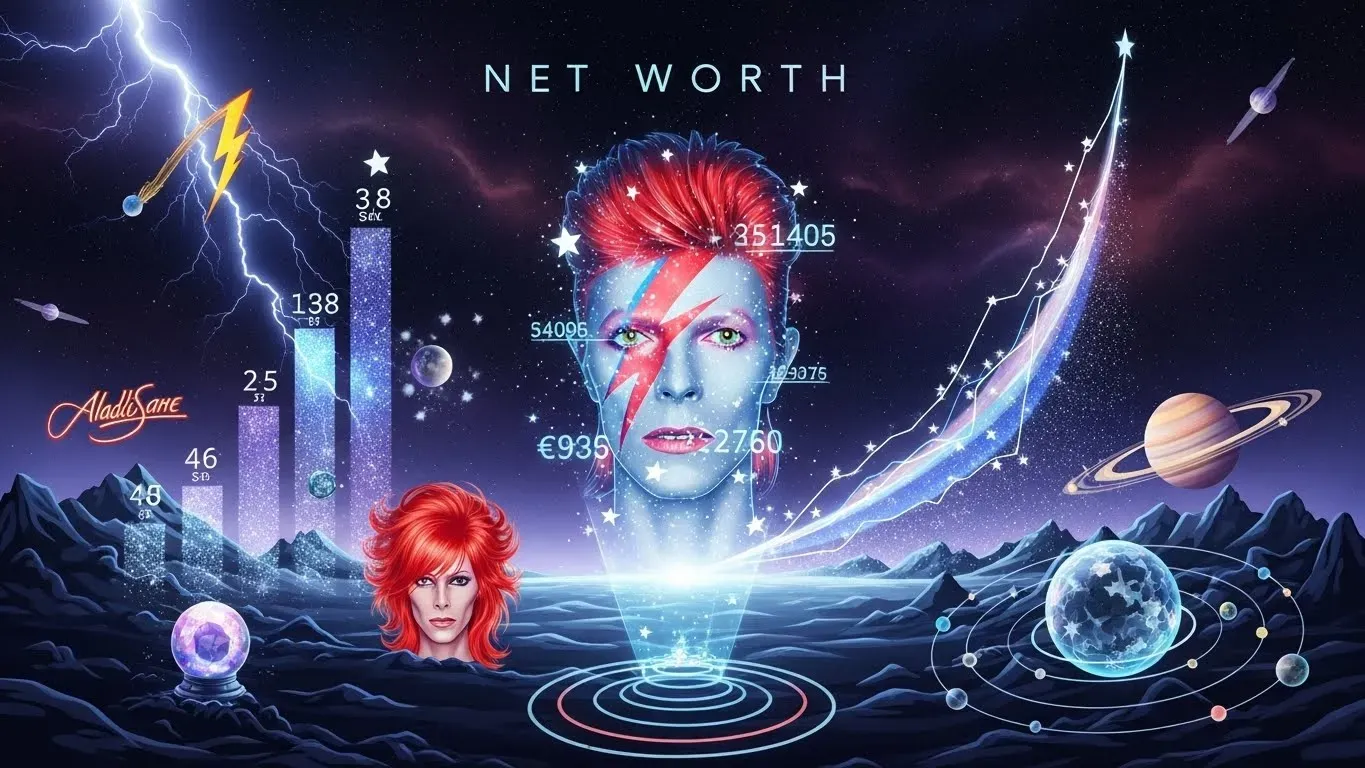

David Bowie was not just a musical legend; he was a cultural force whose impact transcended the boundaries of music, fashion, and art. Known for his ever-evolving persona and groundbreaking music, Bowie’s legacy continues to influence generations.
But behind the glitter and glam, there was a savvy businessman who knew how to turn his creative genius into financial success. From chart-topping albums to high-profile acting roles and astute investments, Bowie’s net worth was a result of both artistic brilliance and smart financial decisions.
In this article, we’ll dive deep into how David Bowie amassed his fortune, explore the various income streams that contributed to his wealth, and examine his financial legacy after his passing.
If you’re a longtime fan or new to his work, understanding the financial side of Bowie’s career offers a fresh perspective on the icon’s life and lasting impact.
Early Life and Career Beginnings
David Robert Jones was born on January 8, 1947, in Brixton, London, to a working-class family. From an early age, he showed a keen interest in music, learning to play the saxophone and eventually forming his first band during his teenage years. However, his journey to stardom wasn’t instant. Bowie faced numerous challenges, including early struggles to secure a recording contract. His early work was a blend of pop, blues, and soul, but it wasn’t until the late 1960s that he began to find his unique voice.
Bowie’s big breakthrough came with the release of his single “Space Oddity” in 1969. The song, with its futuristic sound and unique storytelling, was a massive hit, capturing the imagination of the public and signaling the arrival of a major musical talent. This marked the start of a career that would redefine music and culture.
In the early years of his career, Bowie was still figuring out his identity, experimenting with different sounds and styles. While these early efforts didn’t initially bring in huge amounts of money, they helped lay the foundation for his eventual rise to stardom. His reputation as an innovative artist started to grow, paving the way for his groundbreaking work in the 1970s. This period would set the stage for Bowie to become not just a successful musician, but a global icon with an evolving legacy.
Music Career and Revenue Streams
David Bowie’s music career was marked by constant reinvention, and his ability to stay ahead of trends was key to his financial success. After the success of “Space Oddity,” Bowie began to build a string of iconic albums that defined the 1970s, including The Rise and Fall of Ziggy Stardust and the Spiders from Mars, Aladdin Sane, and Diamond Dogs. These albums, along with his theatrical stage performances, quickly turned Bowie into a household name.
But it wasn’t just album sales and concert tickets that fueled his wealth. Bowie understood the power of royalties early on. His decision to make his music catalog a lucrative asset allowed him to continue earning from his work long after the albums were released. For example, he signed a multi-million dollar contract with RCA Records in the 1970s, solidifying his position as a top-tier artist in the music industry.
Bowie also saw the potential of music licensing long before many of his peers. His songs were featured in countless films, TV shows, and commercials, generating consistent income streams. The song “Heroes,” for instance, was licensed for multiple advertisements, helping it become one of his most recognizable tracks decades after its release.
Tours were another significant source of income. His live performances, especially during his “Thin White Duke” and “Let’s Dance” eras, attracted massive crowds worldwide, further boosting his financial portfolio. Combined with music royalties and savvy licensing deals, Bowie’s music career created a lasting foundation for his fortune.
Acting Career and Contributions to Net Worth
While David Bowie is primarily known for his music, his acting career also played a significant role in both his cultural legacy and financial worth. Bowie’s venture into acting began in the early 1970s when he appeared in the experimental film The Man Who Fell to Earth (1976). Directed by Nicolas Roeg, the film starred Bowie as an alien trying to save his dying planet, and it showcased his ability to embody complex, otherworldly characters. Despite its mixed reception, the film became a cult classic, further elevating Bowie’s mystique and attracting new fans to his work.
In addition to The Man Who Fell to Earth, Bowie appeared in several other films, including Merry Christmas, Mr. Lawrence (1983), where he portrayed a British soldier in a Japanese prison camp, and the beloved Labyrinth (1986), in which he played Jareth, the Goblin King. These roles, particularly his iconic portrayal of Jareth, introduced him to a new generation of fans, adding to his commercial appeal.
Though acting wasn’t as financially lucrative as his music career, it contributed to his overall net worth through high-profile film roles, residuals, and commercial endorsements. Bowie’s involvement in movies also showcased his versatility and cemented his status as a cultural icon beyond music. His acting gigs helped expand his global appeal, making him a more marketable figure both within and outside of the entertainment industry.
Business Ventures and Investments
Beyond music and acting, David Bowie was also a savvy businessman with a keen eye for investments. His wealth wasn’t solely derived from album sales or concert tours—Bowie was a pioneer in turning his intellectual property into a financial asset. One of his most famous financial moves was the creation of the Bowie Bond in 1997. This groundbreaking deal allowed him to securitize the royalties from his back catalog of music. In other words, he sold bonds backed by future royalties from his music to investors, raising $55 million upfront. This innovative move was ahead of its time and set a precedent for other musicians seeking to monetize their catalogs.
Bowie’s investments weren’t limited to music. He was also an avid art collector with a keen interest in contemporary art. His collection included works by artists like Jean-Michel Basquiat, Damien Hirst, and Frank Auerbach, some of which would later appreciate significantly in value. This collection added millions to his net worth and reinforced his image as a true connoisseur of culture, both in and outside of music.
In addition to art, Bowie invested in real estate, purchasing properties in major cities like London, New York, and the French countryside. These investments provided him with substantial returns, especially as property values increased over the years. His diversified approach to wealth combining music, art, and real estate allowed him to continue accumulating wealth even as his active music career slowed down in the 2000s.
Financial Management and Wealth Strategies
David Bowie’s financial success wasn’t just the result of his artistic talent it was also due to his careful and strategic approach to managing his wealth. Unlike many musicians who struggled with financial mismanagement or squandering their earnings, Bowie was known for being exceptionally disciplined when it came to money. He was ahead of his time in understanding the value of long-term financial planning and wealth protection.
One of the key elements of Bowie’s wealth strategy was his ability to diversify his income streams. Beyond the music industry, he actively sought out opportunities in other fields, including acting, art, and real estate. This diversification shielded him from the volatile nature of the music business, where album sales and concert revenues can fluctuate dramatically over time.
Bowie also understood the importance of intellectual property and royalties. While many artists sell their rights early in their careers, Bowie was strategic about retaining ownership of his music catalog. This ensured that, even after his death, his estate would continue to generate significant income from royalties. The creation of the Bowie Bond was a prime example of his innovative thinking, as it allowed him to monetize future royalties without giving up ownership of his music.
Additionally, Bowie worked with top financial advisors who helped him navigate taxes, investments, and estate planning. This careful management of his wealth, combined with his entrepreneurial mindset, ensured that Bowie’s financial legacy endured long after he stepped off the stage.
Estimated Net Worth
David Bowie’s net worth at the time of his death in 2016 was estimated to be between $230 million and $250 million. While this figure places him among the wealthier musicians of his era, it’s important to understand that his financial legacy extends far beyond just his cash holdings at the time of his death. The majority of Bowie’s wealth was tied up in assets, including his music catalog, real estate holdings, art collection, and various business ventures.
A significant portion of his net worth came from his music royalties. Bowie’s catalog, including iconic albums like Ziggy Stardust, Heroes, and Let’s Dance, continued to generate income through licensing deals, streaming royalties, and film placements. His decision to retain ownership of his music rights throughout his career allowed his estate to benefit greatly from these ongoing royalties after his passing.
Bowie’s real estate portfolio was another major asset. His properties, particularly his homes in New York City and London, appreciated significantly in value. In addition to his real estate, his art collection also played a crucial role in his wealth. The value of works by artists like Basquiat and Hirst, which were part of his private collection, skyrocketed after his death.
Bowie’s net worth at the time of his passing is impressive, but what’s even more remarkable is how his wealth continues to grow. Thanks to his estate’s management, his music and other assets continue to generate significant income, ensuring that his legacy remains financially thriving long after his death.
Posthumous Earnings and Continuing Legacy
Even after David Bowie’s death in January 2016, his financial legacy continued to grow. The singer’s estate has been remarkably successful in managing and monetizing his assets, ensuring that his wealth continues to accumulate, decades after his passing. Bowie’s music catalog remains one of the most valuable components of his posthumous earnings, with his songs still featured in films, commercials, and streaming platforms. Classic hits like “Space Oddity,” “Heroes,” and “Let’s Dance” continue to resonate with fans old and new, keeping Bowie’s music in the public eye and generating significant royalties.
Bowie’s estate also benefitted from a resurgence in interest following the release of his final album, Blackstar, which was released just days before his death. The album received critical acclaim and won multiple Grammy Awards, bringing renewed attention to his work. In fact, Blackstar was one of the top-selling albums of 2016, and it contributed substantially to his posthumous earnings.
In addition to royalties from music, Bowie-related memorabilia and auctions have generated millions. Items from his personal collection—such as artwork, costumes, and stage props—have sold for extraordinary amounts at auctions, adding to his financial legacy. His art collection, once valued at tens of millions, has only increased in value, particularly works by artists like Jean-Michel Basquiat and Damien Hirst.
Thanks to these ongoing sources of income, David Bowie’s estate continues to generate tens of millions of dollars annually, solidifying his financial success long after his death.
Philanthropy and Legacy
David Bowie was not only a visionary artist but also a philanthropist who quietly supported various causes during his lifetime. Though he wasn’t as vocal about his charitable giving as some other public figures, Bowie made substantial contributions to a range of social, artistic, and medical causes. His support for charitable organizations often went beyond financial donations; he used his platform to raise awareness and influence public opinion on important issues.
One of the key areas of Bowie’s philanthropy was in medical research, particularly cancer research. When Bowie was privately battling cancer in the last years of his life, he quietly donated to cancer charities, showing his empathy and desire to contribute to important causes even while facing his own health challenges. His death from liver cancer in 2016 brought attention to the disease, and fans and organizations alike honored him by continuing support for research into cancer treatments.
Bowie’s legacy also endures through his contributions to the arts. He supported various art initiatives and maintained strong ties to the contemporary art world, both through his own collection and by helping promote emerging artists. His influence in the world of music and visual art is immeasurable, and his ability to fuse the two continues to inspire artists today.
Through his innovative financial strategies, smart investments, and continued involvement in charitable work, Bowie’s legacy extends far beyond music. His estate continues to honor his memory, ensuring that his financial and cultural impact remains significant for years to come.
Conclusion
David Bowie’s financial legacy is a testament to his geniusnot just as an artist, but as a shrewd businessman who understood the value of his work and how to protect it. From his early struggles to his rise as a global icon, Bowie’s ability to diversify his income sources and make smart, forward-thinking decisions ensured that his wealth continued to grow long after his death.
His music, acting, art, and investments created a multifaceted financial portfolio that has generated millions, both during his lifetime and posthumously.
Through his innovative moves, such as the creation of the Bowie Bonds, he set a precedent for other musicians to follow, showing that intellectual property could be a valuable asset. His investments in real estate, art, and other ventures further solidified his financial success, creating a lasting foundation for his estate to thrive.
Even after his death, his music catalog and art collection continue to appreciate in value, proving that Bowie’s wealth wasn’t just a product of his time it’s a legacy that endures.
Moreover, Bowie’s philanthropic efforts, although not as publicly acknowledged as his artistic achievements, also left a positive mark on the world.
His contributions to cancer research and support for contemporary artists are part of the broader legacy he leaves behind.
David Bowie’s life wasn’t just about his music; it was about the way he crafted a legacy that transcended his artistic endeavors.
Today, his estate remains a powerful symbol of how creativity, business savvy, and personal values can intersect to create a lasting financial legacy.
FAQs
1. What was David Bowie’s net worth at the time of his death?
David Bowie’s net worth at the time of his death in 2016 was estimated to be between $230 million and $250 million. This included his music catalog, real estate holdings, art collection, and other investments.
2. How did David Bowie make most of his money?
Bowie’s primary income came from his music royalties, concert tours, and album sales. He was also financially astute, earning from licensing deals, acting roles, and his innovative Bowie Bond deal. His investments in art and real estate also significantly contributed to his wealth.
3. Did David Bowie create the Bowie Bond, and what was it?
Yes, in 1997, Bowie made headlines by securitizing his music royalties through a financial instrument known as the Bowie Bond. This allowed him to sell bonds based on the future royalties of his music catalog, raising $55 million upfront. It was a pioneering move that gave Bowie liquidity while maintaining ownership of his music.
4. What is David Bowie’s legacy after his death?
Bowie’s legacy is not only artistic but also financial. His estate continues to generate revenue through royalties, memorabilia sales, and auctions of his art collection. His philanthropic contributions, particularly to cancer research, and his groundbreaking influence on music, fashion, and culture, ensure that his impact endures.
5. How did David Bowie’s art collection contribute to his net worth?
Bowie was an avid art collector, owning works by artists like Jean-Michel Basquiat and Damien Hirst. After his death, his art collection appreciated significantly in value, contributing millions to his estate’s worth.