
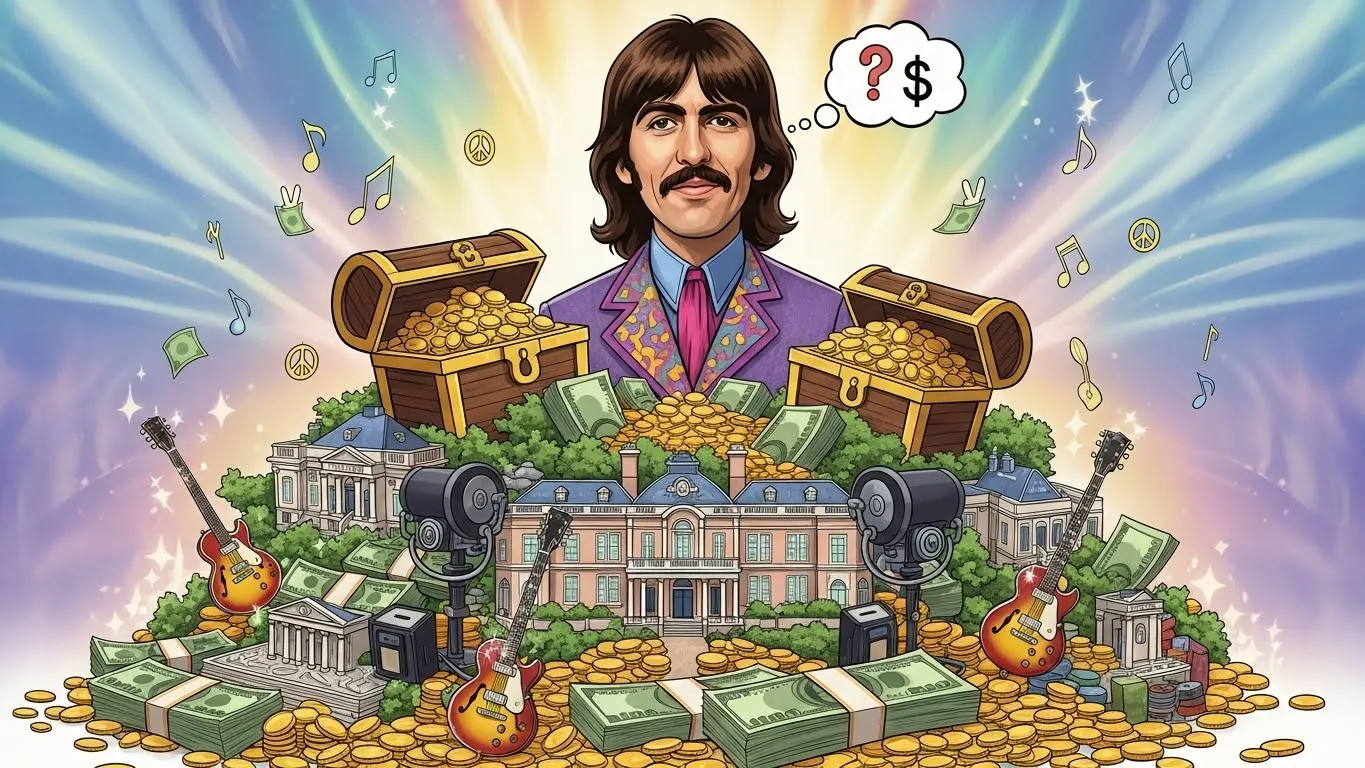

George Harrison, famously known as the “Quiet Beatle,” left an indelible mark on music history through his work with The Beatles and as a solo artist.
While fans admire his talent, many are also curious about George Harrison’s net worth and how his incredible career translated into wealth.
From his early days in Liverpool to global superstardom, Harrison not only contributed iconic songs like Here Comes the Sun and Something but also built a financial legacy through music royalties, smart investments, and property ownership.
Beyond his musical earnings, his involvement in charitable projects, most notably the Concert for Bangladesh, showcased both his generosity and the unique ways he managed wealth.
In this article, we will explore George Harrison’s earnings, estate, lifestyle, and posthumous income, providing a detailed picture of his fortune and the legacy he left behind for fans and his family alike.
Early Life and Career Beginnings
George Harrison was born on February 25, 1943, in Liverpool, England, into a modest family. From a young age, he showed a keen interest in music, learning the guitar and drawing inspiration from early rock ‘n’ roll and skiffle bands. His parents supported his passion, allowing him to explore instruments and practice regularly, which laid the foundation for his future success.
Harrison’s musical journey took a significant turn in 1958 when he met John Lennon and later Paul McCartney, forming the group that would eventually become The Beatles. Though the youngest member of the band, George quickly gained recognition for his exceptional guitar skills and ability to experiment with different musical styles, including Indian music, which would later influence some of the Beatles’ most iconic songs.
During these early years, Harrison’s income was modest. The band performed at local venues, honing their craft and building a following. However, even at this stage, his talent hinted at the financial success that lay ahead. Early royalties from performances, recordings, and songwriting began to accumulate, setting the stage for substantial earnings during the Beatles era.
Harrison’s commitment to his craft, combined with his innovative approach to music, not only helped The Beatles achieve global fame but also positioned him to secure a lasting financial legacy. These formative years highlight the beginnings of a career that would ultimately lead to one of the most remarkable net worths among legendary musicians.
The Beatles Era: Wealth Accumulation
George Harrison’s wealth began to grow exponentially during The Beatles era, one of the most commercially successful periods in music history. As the lead guitarist of the band, Harrison contributed not only his signature guitar riffs but also some of the Beatles’ most memorable songs, including Here Comes the Sun and Something. Each composition earned him songwriting royalties, which became a significant part of his income.
The Beatles’ albums, including Abbey Road, Sgt. Pepper’s Lonely Hearts Club Band, and The White Album, sold millions of copies worldwide, generating substantial revenue for the band members. In addition, the group’s worldwide tours, merchandise sales, and endorsement deals added layers to Harrison’s earnings. Even as the youngest member, he received a fair share of profits, ensuring a solid financial foundation.
Beyond performance income, Harrison also benefited from music publishing rights, particularly through companies like Harrisongs, which managed his solo compositions. These rights allowed him to continue earning royalties long after the albums were released. His innovative approach to incorporating Indian music and spiritual themes also distinguished his work, boosting both popularity and financial returns.
By the time The Beatles disbanded in 1970, George Harrison had already secured a substantial net worth, thanks to a combination of royalties, album sales, touring income, and publishing rights. This period not only solidified his place in music history but also laid the groundwork for his financial independence and success as a solo artist.
Solo Career and Musical Ventures
After The Beatles disbanded in 1970, George Harrison launched a highly successful solo career that added significantly to his net worth. His triple album, All Things Must Pass, became a commercial and critical success, featuring hits like My Sweet Lord and What Is Life. The album not only solidified Harrison’s identity as a solo artist but also generated substantial royalties from album sales, radio play, and licensing.
Beyond recording, Harrison organized and participated in charitable projects that left a lasting legacy. Most notably, the Concert for Bangladesh in 1971 raised millions for humanitarian relief. While the event was philanthropic in nature, it also increased his visibility and strengthened his reputation as a socially conscious musician, indirectly supporting his financial and personal brand.
Harrison continued to release solo albums throughout the 1970s and 1980s, including Living in the Material World and Cloud Nine, each contributing to his earnings. Collaborations with other prominent artists, such as Eric Clapton and Bob Dylan, brought in additional income through joint projects, songwriting, and live performances.
In addition to music, Harrison explored other creative ventures such as film production through HandMade Films, which produced cult classics like Monty Python’s Life of Brian. These endeavors diversified his income and reflected his keen sense of business and artistry.
Overall, George Harrison’s solo career not only reinforced his artistic legacy but also expanded his financial empire, proving that his talent and vision could generate wealth independently of The Beatles. His solo earnings, combined with royalties and investments, played a crucial role in building his lasting net worth.
Business Ventures and Investments
Beyond his music career, George Harrison was a shrewd businessman who made strategic investments that added to his net worth. One of his most significant financial assets was Harrisongs, his personal music publishing company. Through Harrisongs, Harrison owned the rights to many of his solo compositions, ensuring a steady stream of royalties from album sales, radio play, and licensing for films and commercials. This ownership allowed him to maintain long-term financial stability, even years after his albums were released.
Harrison also invested in real estate, acquiring several high-profile properties in the UK and the United States. His English homes, including the famous Friar Park estate, showcased both his luxurious taste and his savvy approach to property investment. These estates not only served as personal residences but also appreciated in value over time, adding to his overall wealth.
In addition, Harrison explored entrepreneurial ventures beyond music. Notably, he co-founded HandMade Films, which produced several successful films, including the cult classic Monty Python’s Life of Brian. While his initial investment in HandMade Films was risky, the studio’s success demonstrated Harrison’s ability to diversify his income through creative business projects.
Through a combination of music publishing, real estate, and entrepreneurial endeavors, George Harrison established a financial portfolio that extended well beyond his role as a musician. These investments ensured that his net worth was not solely dependent on album sales or touring, cementing his status as a financially savvy artist with a lasting legacy.
Net Worth at Death
At the time of his passing in November 2001, George Harrison had accumulated a considerable fortune, with estimates placing his net worth between $100 million and $150 million. His wealth was derived from multiple sources, including royalties from both The Beatles’ catalog and his solo work, real estate investments, business ventures, and valuable personal assets.
A significant portion of Harrison’s wealth came from music publishing rights, particularly through his company Harrisongs. These rights ensured a continuous flow of royalties from his compositions, including hits like My Sweet Lord and Here Comes the Sun. Even decades after their release, these songs continued to generate substantial income through licensing, streaming, and covers by other artists.
Harrison also owned several high-value properties, including his famed Friar Park estate in England, which contributed to his net worth. His personal belongings, such as rare guitars, artwork, and memorabilia, held both sentimental and financial value.
Compared to his former Beatles bandmates, Harrison’s estate was smaller than Paul McCartney or Ringo Starr but still substantial, reflecting both his musical success and prudent financial planning. His wife, Olivia Harrison, and their family inherited his estate, which continues to generate revenue through ongoing royalties and management of his intellectual property.
George Harrison’s net worth at death highlighted not only his success as a musician but also his ability to build long-term wealth through smart investments, music rights, and creative ventures, ensuring that his financial legacy would endure alongside his cultural and musical influence.
Posthumous Earnings and Legacy Income
Even after his passing in 2001, George Harrison’s estate continues to generate substantial posthumous earnings, reflecting the lasting impact of his music and creative ventures. Through Harrisongs, the company that manages his music publishing rights, Harrison’s compositions remain a steady source of revenue. Songs like My Sweet Lord, Here Comes the Sun, and Something are continually licensed for films, commercials, and streaming platforms, ensuring that his estate benefits financially from his timeless work.
Re-releases of Harrison’s solo albums, as well as remastered Beatles collections, also contribute to his ongoing income. These projects not only introduce his music to new generations but also provide a consistent flow of royalties to his heirs. Additionally, documentaries and biographical projects about Harrison and The Beatles, such as feature films or special editions, further boost the estate’s earnings.
The management of Harrison’s assets, overseen by his widow Olivia Harrison, has been strategic and effective. By maintaining ownership of key intellectual properties and carefully licensing his music, the Harrison estate has ensured that his financial legacy grows even decades after his death.
Beyond financial gains, Harrison’s posthumous influence reinforces his cultural legacy. His spirituality, charitable contributions, and musical innovations continue to attract admiration worldwide, which indirectly supports revenue streams tied to his name and work. Today, George Harrison’s estate exemplifies how a musician’s vision, talent, and smart management can create long-term wealth that endures well beyond their lifetime.
Lifestyle and Personal Luxuries
George Harrison was not only a musical genius but also a man who embraced a balanced and meaningful lifestyle. Despite his immense wealth, he was known for his spiritual focus and humility, often prioritizing personal fulfillment over extravagant spending. That said, his net worth allowed him to enjoy a comfortable and luxurious life.
Harrison owned several notable properties, with the most famous being Friar Park, a sprawling Victorian estate in Henley-on-Thames, England. The estate featured extensive gardens, a private studio, and unique architectural details, reflecting both his refined taste and love for tranquility. In addition, he maintained homes in the United States, where he spent time recording and collaborating with other artists.
His passion for music extended into his possessions. Harrison collected rare guitars, vintage instruments, and memorabilia, some of which later became highly valuable to collectors. He also invested in art and spiritual artifacts, combining his financial resources with personal interests.
Though he enjoyed luxury, Harrison was also deeply philanthropic. He contributed generously to charitable causes, most notably the Concert for Bangladesh, which raised millions for humanitarian relief. Even his personal wealth was used to support initiatives aligned with his values, including spiritual organizations and social causes.
George Harrison’s lifestyle reflected a balance between wealth, creativity, and spirituality. While he enjoyed luxury and comfort, his focus on meaningful experiences and giving back ensured that his fortune was not just a measure of fame but also a tool for creating lasting positive impact.
Influence and Cultural Legacy
George Harrison’s impact extends far beyond his net worth; his influence on music, spirituality, and popular culture is immeasurable. As the lead guitarist of The Beatles, he helped shape the sound of modern rock, introducing innovative guitar techniques and experimenting with Indian instruments, most notably the sitar, in songs like Norwegian Wood. His musical creativity inspired generations of artists and continues to influence contemporary musicians worldwide.
Harrison’s solo career further cemented his legacy, with albums like All Things Must Pass demonstrating his talent as both a songwriter and performer. His spiritual journey, including his dedication to Hinduism and meditation, influenced his lyrics and public persona, encouraging fans to explore music and mindfulness in tandem. This unique blend of artistry and spirituality made him stand out, not only as a musician but as a cultural icon.
Financially, Harrison’s legacy translates into ongoing royalties, licensing, and estate revenue, but it’s also reflected in his enduring relevance. Films, documentaries, re-releases of albums, and Beatles retrospectives continue to keep his work in the public eye, introducing his music to new generations.
Moreover, Harrison’s charitable efforts, including the groundbreaking Concert for Bangladesh, demonstrated that influence is not limited to art or wealth it extends to social and humanitarian impact. Today, his contributions to music, culture, and philanthropy ensure that George Harrison remains an enduring figure whose legacy outlives his lifetime earnings, making him one of the most respected and admired artists in history.
Fun Facts About Harrison’s Wealth
George Harrison’s fortune wasn’t just about albums and royalties; it also included unique and fascinating assets that reflect his personality and tastes. One of the most notable aspects of his wealth was his collection of rare guitars and musical instruments, some of which have become highly valuable to collectors. Instruments like his Gretsch Country Gentleman guitar and custom Fender guitars not only defined his signature sound but also became prized financial assets.
In addition to instruments, Harrison owned a variety of memorabilia, artwork, and spiritual artifacts. His interest in Indian culture and Hindu spirituality meant he often collected statues, paintings, and books that resonated with his beliefs. Over time, these items gained significant financial value, adding a unique dimension to his estate.
Harrison was also known for his prudent investments. Beyond real estate and music publishing, he occasionally invested in creative ventures like HandMade Films, which produced cult classics such as Monty Python’s Life of Brian. While the primary aim was artistic, these investments provided additional revenue streams that contributed to his overall net worth.
Interestingly, some of Harrison’s personal purchases and gifts have become legendary. From rare automobiles to personalized jewelry and spiritual objects, these items reflected both his wealth and personality. Auctions of his memorabilia after his passing have fetched impressive sums, showing that George Harrison’s influence and financial footprint extends beyond music.
These fun facts demonstrate that Harrison’s wealth was as diverse and creative as his music, blending artistry, spirituality, and smart financial decisions in ways that continue to fascinate fans and collectors today.
Conclusion
George Harrison’s life and career demonstrate how talent, creativity, and smart financial decisions can combine to create both cultural and monetary legacy.
From his early days in Liverpool to global superstardom as a member of The Beatles, Harrison built a fortune that reflected not only his musical contributions but also his business acumen and long-term planning.
His songwriting royalties, solo albums, and music publishing rights provided substantial income during his lifetime, while investments in real estate and ventures like HandMade Films further diversified his wealth.
At the time of his passing in 2001, George Harrison’s net worth was estimated between $100 million and $150 million, a testament to decades of artistic output and strategic management of his assets.
Even posthumously, his estate continues to generate revenue through licensing, re-releases, and collectibles, ensuring that his influence and wealth endure.
Beyond numbers, Harrison’s legacy is defined by his artistry, spirituality, and philanthropy. He pioneered new sounds, brought Eastern influences to Western music, and contributed to global humanitarian causes such as the Concert for Bangladesh.
His lifestyle, balanced between luxury, creativity, and charity, reflected a man who valued meaning as much as money.
Ultimately, George Harrison’s life illustrates that true wealth encompasses more than just financial gain.
It is the combination of artistic achievement, cultural impact, and lasting influence that cements his place in history not just as a legendary Beatle, but as an icon whose contributions continue to inspire and generate both admiration and revenue for generations to come.
(FAQs)
1. What was George Harrison’s net worth when he died?
At the time of his passing in 2001, George Harrison’s net worth was estimated between $100 million and $150 million. His wealth came from music royalties, solo albums, Beatles earnings, real estate, and business ventures like HandMade Films.
2. How much did George Harrison earn from The Beatles?
Harrison earned a significant portion of income from The Beatles through album sales, world tours, and merchandising. While John Lennon and Paul McCartney wrote most of the songs, Harrison contributed hits like Here Comes the Sun and Something, earning him ongoing royalties.
3. Did George Harrison make money from his solo career?
Yes. Albums such as All Things Must Pass and Cloud Nine generated substantial royalties. Hit singles, concert tours, and collaborations with other artists also contributed to his financial success independently of The Beatles.
4. How much does the Harrison estate earn today?
Even decades after his death, Harrison’s estate continues to earn money from licensing his songs, re-releases of albums, documentaries, and merchandising. His company, Harrisongs, manages most of these rights, ensuring consistent posthumous revenue.
5. What properties did George Harrison own?
Harrison owned several luxurious properties, including Friar Park in England, which became his iconic estate. He also invested in homes in the United States and valuable real estate that appreciated over time, adding to his net worth.
6. How did George Harrison invest his wealth?
Apart from music royalties and real estate, Harrison invested in creative ventures like HandMade Films, collectibles, and art, diversifying his income and securing long-term financial stability.