
In a world where technology constantly reshapes the way we live, dream journey AI pushes the boundaries of imagination and reality.
This isn’t sci‑fi fluff — it’s a real, expanding field that blends AI dream generator, dream visualization AI, and AI-assisted dreaming tools with neuroscience and creativity.
In this deep dive, we’ll explore how artificial intelligence intersects with dreams, what’s possible today, and where this powerful blend might take us tomorrow.
From understanding your subconscious to creating virtual dream experiences, this article unpacks the technology, science, and implications of using AI to model, simulate, and interpret dreams. You’ll walk away with real knowledge — not vague claims — about AI in dream exploration.
What Is Dream Journey AI? A Clear Vision
When we say dream journey AI, we’re talking about combining artificial intelligence with the human dream experience. It’s an interdisciplinary approach that uses machine learning, neural networks, and semantic analysis to:
- Model dream content
- Generate immersive dreamlike visuals
- Interpret dream themes
- Explore subconscious patterns
- Aid sleep analysis and lucid dreaming
At its heart, dream journey AI is about bridging your internal experiences with intelligent models that can learn, predict, and create. It’s part psychology, part technology, and part creative exploration.
Here’s a simple breakdown:
| Concept | What It Means |
|---|---|
| Dream | Mental imagery, emotion, and sensory experience during sleep |
| Journey | Narrative or progression through dream-like scenarios |
| AI / Artificial Intelligence | Systems designed to learn patterns from data and generate outputs |
Together, these elements form a powerful framework for observing dreams not just as private experiences, but as data points we can explore, visualize, and interact with.
How AI Interprets Dreams: The Science Behind It
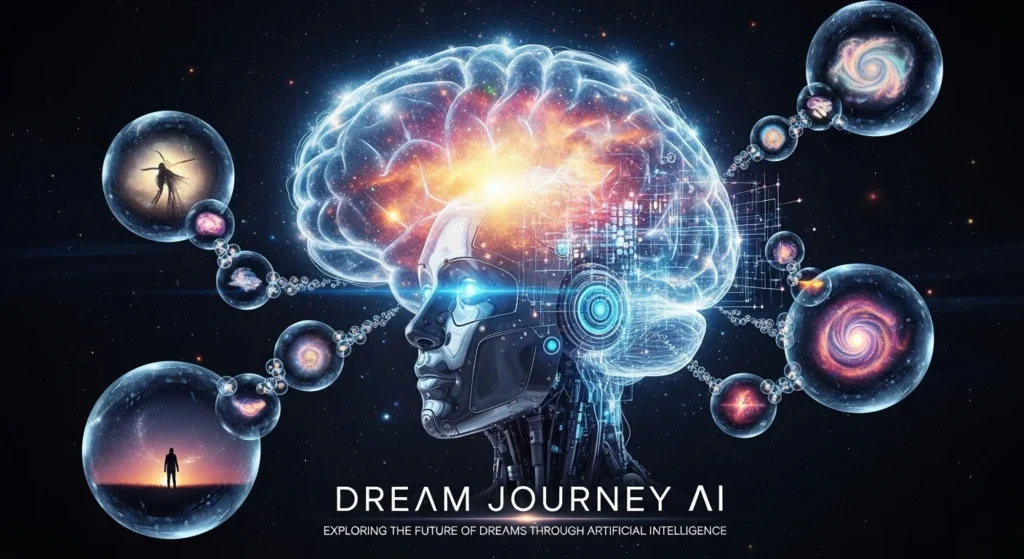
To understand how AI dream interpretation works, you need a grasp of how machines learn. At a high level, AI systems — especially deep learning models — look for patterns in massive datasets. When we feed enough dream reports, narratives, and imagery into these systems, they begin to recognize structural similarities.
How It Works in Practice
- Data Collection
AI needs dream data — often text descriptions, recordings, and even physiological sleep data. - Natural Language Processing (NLP)
Algorithms extract themes like emotions, settings, and actions from dream reports. - Semantic Analysis
The system identifies underlying concepts, linking symbolic language to specific patterns. - Pattern Mapping
Through topic modeling and concept extraction, AI learns common dream elements and their relationships. - Generation and Interpretation
Based on learned structures, the AI can generate dreamlike narratives, suggest possible symbolic meanings, or create AI dream generator visuals.
Here’s a visualization of the pipeline:
Dream Reports → NLP → Semantic Extraction → AI Pattern Analysis → Dream Interpretation / Generation
This isn’t guesswork. It’s statistical modeling reinforced by real data. When done well, AI can reveal insights into dream structure that humans might overlook.
AI Dream Generator: Crafting Immersive Experiences
One of the most exciting applications of dream journey AI is the AI dream generator — a tool that constructs dreamlike landscapes and narratives based on user input, psychological profiles, or random creative processes.
Use Cases for AI Dream Generators
- Creative Writing – Inspire authors with surreal, narrative-rich scenarios.
- Therapeutic Exploration – Help therapists visualize patient dream themes.
- Virtual Simulations – Produce immersive environments for relaxation and imagination.
- Entertainment and Games – Create dreamlike levels or storytelling experiences.
Take this example:
Imagine telling an AI, “Create a dream where I sail through glowing skies guided by mythical birds.”
The AI can output detailed visuals, narrative arcs, and emotional tones that fit your prompt.
Some tools even adapt in real-time, letting you refine the dream as you go. This is where AI dream simulation overlaps with creativity.
Dream Visualization AI: Art Meets Algorithms
Dream visualization bridges the gap between what we feel in a dream and what we see in waking life. Tools in this space do more than generate pretty pictures. They:
- Translate textual dream descriptions into visuals
- Map moods and symbols into design elements
- Create animated dreamscapes for multimedia apps
A typical pipeline works like this:
- User submits dream description
- NLP analyzes text for keywords and emotional tone
- Visualization model generates imagery
- Output is fine‑tuned for style and coherence
Here’s a simplified workflow:
Text → NLP → Symbol Detection → Visual Mapping → Image / Animation
This is where generate dreams with AI turns fiction into something visually vibrant.
Example Output Themes:
- Floating cities at sunset
- Talking animals in crystalline forests
- Endless staircases leading to unknown skies
Those aren’t random. They combine semantic meaning with imaginative pattern generation.
AI-Assisted Dreaming: Merging Technology with Sleep
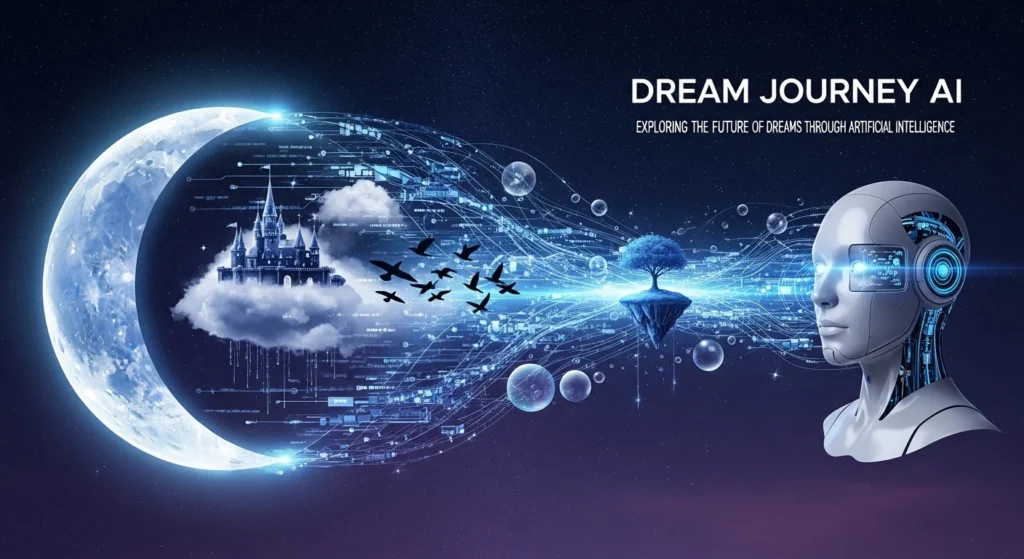
Beyond generation and visualization, AI now plays a role in aiding the dream process itself.
Lucid Dream AI Technology
Lucid dreaming — becoming aware that you’re dreaming while still asleep — has fascinated psychologists for decades. Now, AI tools claim to:
- Detect sleep stages in real time
- Provide auditory cues at the right moment
- Improve dream recall upon waking
Using sleep metrics like EEG or eye movement data, AI can predict when you’re entering REM — the stage most associated with vivid dreams. Then it can gently nudge consciousness without waking you.
This is not sci‑fi anymore. It’s a real intersection of wearables, machine learning, and sleep science.
AI Sleep Analysis: What Your Dreams Reveal
If dreams are data, then AI can help us understand deeper patterns. AI sleep analysis tools do this by combining physiological measurements with semantic insight.
What These Systems Track
| Metric | What It Shows |
|---|---|
| Heart Rate Variability (HRV) | Stress and emotional response |
| REM Duration | Intensity of vivid dreaming |
| Movement Patterns | Sleep disruptions |
| Dream Content | Emotional and symbolic structure |
Analyzing all of these together gives a richer picture of how your subconscious works. Some tools even link dream content back to your waking life, stress levels, and emotional triggers.
This is where AI subconscious exploration journeys begin.
Dream Scenario Generator: Personalizing Your Dreamscape
Some AI tools let you build personalized dream scenarios. Instead of random outputs, you:
- Select themes (adventure, peace, surrealism)
- Provide emotional goals (reflection, healing, excitement)
- Choose narrative elements (characters, landscapes)
Based on this, the AI constructs:
- A coherent dream narrative
- Visual style options
- Emotional curves and pacing
This becomes a virtual dream experience tailored to your psyche.
It’s like choosing your path in a storybook, but the paths emerge fluidly based on AI learning and your preferences.
Dream Mapping AI: Charting Your Inner World
Dream mapping goes beyond visualization. It’s about showing how your dreams connect over time.
Imagine a tool that:
- Tracks recurring dream themes
- Maps emotional intensity
- Connects dream symbols across weeks or months
Here’s a simplified example table:
| Theme | Frequency | Emotional Tone | Symbol |
|---|---|---|---|
| Water | High | Calm → Anxiety | Ocean |
| Falling | Medium | Fear | Desert Cliff |
| Flying | Low | Freedom | Golden Wings |
AI uses this to show patterns, giving you insight into subconscious priorities or stressors.
This also aids in AI dream interpretation — not as mysticism, but as data‑supported narrative structure.
AI-Powered Lucid Dreaming Tools
Lucid dream tools go beyond analysis and into active influence. These systems:
- Analyze sleep stages through sensors
- Cue auditory or tactile signals
- Track dream recall
- Suggest strategies for achieving lucidity
Some use machine learning to adapt cues based on individual sleep responses. This personalization improves success over time.
Here’s a quick guide:
Tips for AI‑Enhanced Lucid Dreaming
- Set clear intention before sleep
- Use AI signals during REM stages
- Log dream details for AI pattern learning
- Adjust cues based on feedback
This can become a feedback loop where your dream awareness grows stronger with each sleep cycle.
Real World & Ethical Considerations
As dreamy as all this sounds, there are real questions we must ask:
Privacy
Dream data is intensely personal. If AI tools collect dreams, who owns that data?
Interpretation Risks
AI may overfit or misinterpret symbolic meanings, especially across different cultures.
Dependency
Relying on AI to influence sleep could change natural sleep rhythms.
These concerns aren’t deal‑breakers. They just require thoughtful design and ethical guardrails.
Looking Ahead: The Future of Dream Journey AI
We’re still early in the AI-powered dream tools era, but rapid progress may include:
- Fully immersive virtual dream experiences
- Brain‑computer interfaces that refine dream generation
- Therapies using dream patterns to inform mental health
- Cross‑cultural dream meaning databases
- Hyper‑personalized dream maps tied to daily life
This could reshape how we view sleep, consciousness, creativity, and self‑understanding.
Conclusion:
Dreams have always been mysterious, intangible, and deeply Personal. Today, dream journey AI offers a bridge between inner worlds and technological insight. We now have tools that can:
- Generate dreams with AI
- Interpret dream content intelligently
- Visualize dream narratives
- Support lucid dreaming
- Analyze sleep and subconscious links
Rather than replacing human experience, these tools deepen it. They let you explore your inner landscape with guided intelligence — and maybe make sense of patterns you once dismissed.
As AI evolves, so will our understanding of dreams. What does that mean for creativity, therapy, well‑being, and culture? We’re just beginning the journey — and the dream is only getting richer.