

If you’ve ever found yourself confused about the difference between Indica vs Sativa, you’re definitely not alone. I remember the first time I heard these terms I thought it was a simple choice between “relaxing” and “energizing.”
But as I explored more, I realized there’s a lot more to it than just that. From how each strain affects your body and mind to how modern science is changing what we thought we knew, the topic can feel overwhelming for beginners.
In today’s world, where cannabis is becoming more widely discussed for both wellness and recreational use, understanding these differences really matters. Choosing the wrong type could mean feeling sleepy when you wanted energy—or anxious when you were trying to relax.
In this guide, I’ll break down everything in a simple, clear way so you can confidently understand and choose what works best for you.
🌿 What is Cannabis? (Quick Beginner Overview)
Cannabis is a natural plant that has been used for centuries for both medicinal and recreational purposes. It contains active compounds that interact with the human body, especially the brain, to create different physical and mental effects. Today, cannabis is widely known for its ability to help with relaxation, pain relief, mood enhancement, and even creativity.
The plant mainly contains chemical compounds called cannabinoids, with the two most important being THC (tetrahydrocannabinol) and CBD (cannabidiol). THC is responsible for the “high” feeling, while CBD is more associated with calming and therapeutic effects without intoxication. These compounds work with the body’s endocannabinoid system, which helps regulate mood, sleep, appetite, and stress.
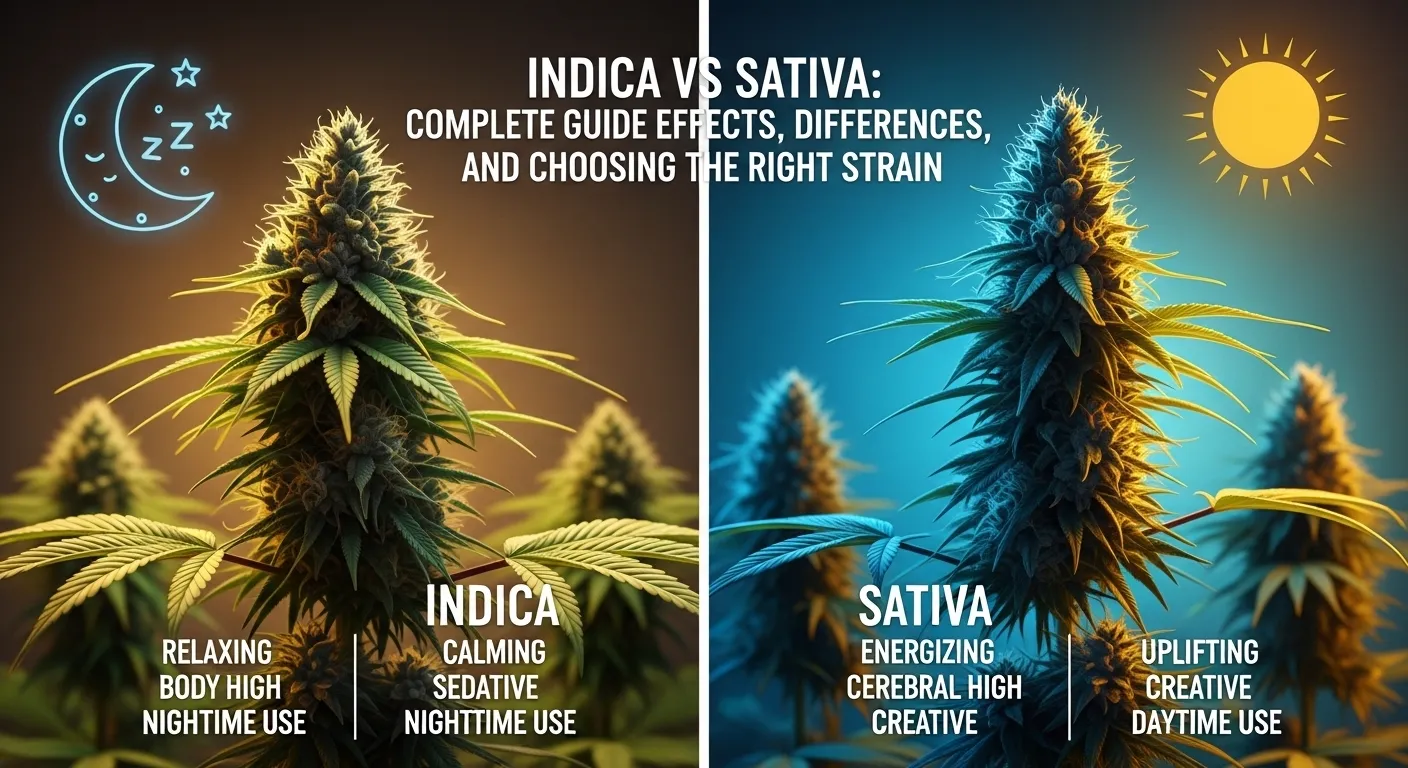
There are three main types of cannabis that people usually talk about: Indica, Sativa, and Hybrid. Indica is often linked with relaxing and body-focused effects, making it popular for nighttime use. Sativa is typically associated with energizing and uplifting effects, often preferred during the day. Hybrid strains are a mix of both, offering balanced or customized experiences depending on their composition.
Understanding cannabis at this basic level is important before diving deeper into the differences between Indica and Sativa, because the effects you feel are influenced by more than just the plant type.
🌱 What is Indica?
Indica is one of the primary types of cannabis, traditionally known for its calming and relaxing effects. I remember the first time I learned about Indica—it was described as the “go-to choice” when you want to unwind after a long, stressful day. Over time, this reputation has made it especially popular among people looking for comfort, rest, and physical relief.
Indica plants are typically short, bushy, and dense, with wide leaves and a faster growth cycle compared to other types. They originally come from cooler regions such as parts of Central and South Asia, where the climate influenced their compact structure.
When it comes to effects, Indica is often associated with a body-focused experience, sometimes called a “body high.” This can include feelings of deep relaxation, muscle relief, and even heaviness in the limbs. Because of this, many people prefer Indica strains in the evening or before bedtime.
Indica is commonly used for:
- Improving sleep quality
- Reducing stress and anxiety
- Relieving body pain or tension
However, it’s important to remember that not every Indica strain will feel exactly the same. The effects can vary depending on the levels of THC, CBD, and other compounds. Still, as a general rule, Indica is often the better choice when your goal is to slow down, relax, and recharge.
🌞 What is Sativa?
Sativa is another major type of cannabis, widely known for its uplifting and energizing effects. When I first explored Sativa, it was often described as the perfect daytime option—something that helps you feel more awake, focused, and mentally active. Unlike Indica, which is linked to relaxation, Sativa is usually associated with a more stimulating experience.
Sativa plants are typically tall, thin, and airy, with narrow leaves and a longer growth cycle. They originally come from warmer, tropical regions, which is why they grow larger and require more time to mature compared to Indica plants.
In terms of effects, Sativa is often connected to a “head high”, meaning it mainly influences the mind rather than the body. Users may experience increased creativity, improved mood, sharper focus, and a boost in energy. This makes Sativa a popular choice for activities that require mental engagement or social interaction.
Sativa is commonly used for:
- Enhancing creativity and focus
- Boosting mood and reducing fatigue
- Supporting daytime productivity
However, higher THC levels in some Sativa strains can sometimes lead to feelings of anxiety or restlessness, especially for beginners. That’s why it’s important to start with small amounts and see how your body reacts. Overall, Sativa is often the better choice when you want to stay active, alert, and inspired throughout the day.
⚖️ Indica vs Sativa: Key Differences (Side-by-Side Comparison)
Now that you understand both types individually, let’s compare Indica vs Sativa side by side to make things even clearer. When I first tried to figure this out, seeing the differences in a simple format made everything much easier to understand.
At a basic level, the biggest difference lies in how each one makes you feel. Indica is generally known for its calming, body-focused effects, while Sativa is linked to energizing, mind-focused experiences. This is why people often choose Indica for nighttime use and Sativa for daytime activities.
Another noticeable difference is in the physical appearance of the plants. Indica plants are shorter, bushier, and more compact, whereas Sativa plants grow taller with thinner leaves. These physical traits reflect the environments they originally came from.
When it comes to usage, Indica is commonly associated with relaxation, sleep, and pain relief, while Sativa is more connected to focus, creativity, and mood enhancement. However, it’s important to remember that these are general patterns—not strict rules.
Here’s a quick breakdown:
- Indica: Relaxing, body-heavy, best for evening or rest
- Sativa: Energizing, uplifting, best for daytime or activity
Understanding these key differences gives you a strong foundation, but as you’ll see next, the actual effects can vary depending on more than just whether a strain is labeled Indica or Sativa.
🧠 Effects Comparison: How Indica and Sativa Feel
Understanding how Indica vs Sativa actually feel is where things get more personal. When I first explored this, I realized that the experience isn’t just about labels—it’s about how your body and mind respond in real time.
With Indica, the effects are usually more physical and grounding. You may feel your muscles relax, your body become heavier, and your mind slow down. It’s the kind of feeling that makes you want to lie down, watch something calm, or drift off to sleep. This is why many people describe Indica as soothing and comforting, especially after a long or stressful day.
On the other hand, Sativa tends to create a more mental and uplifting experience. Instead of feeling heavy, you might notice a boost in energy, clearer thinking, and even a sense of excitement or motivation. It can make activities like talking, creating, or working feel more engaging and enjoyable.
However, the intensity of these effects can vary. Factors like your tolerance, mood, environment, and the specific strain all play a role. Some people may feel relaxed with a Sativa or energized with an Indica—it’s not always predictable.
That’s why it’s important to treat these categories as general guides rather than strict rules. Your personal experience will always be the most important factor in understanding what works best for you.
🧬 The Truth: Indica vs Sativa is Outdated (Modern Science Explained)
As I dug deeper into the topic of Indica vs Sativa, I realized something surprising—this traditional classification is no longer fully accurate in modern cannabis science. While these labels are still widely used, they don’t always predict how a strain will actually affect you.
Originally, Indica and Sativa were used to describe the physical structure and origin of the plant, not necessarily the experience it creates. Over time, people started linking Indica with relaxation and Sativa with energy, but today’s cannabis strains are far more complex.
Most modern cannabis is actually hybrid, meaning it has been crossbred multiple times. Because of this, the effects you feel are influenced less by whether it’s labeled Indica or Sativa and more by its chemical composition.
Two key factors play a major role:
- Cannabinoids (like THC and CBD)
- Terpenes (aromatic compounds that influence effects)
For example, a strain labeled “Indica” could still feel uplifting if it contains certain terpenes, while a “Sativa” might feel calming depending on its chemical profile.
This is why many experts now recommend focusing on what’s inside the strain rather than its label. Understanding cannabinoids and terpenes gives you a much more accurate way to predict your experience.
So while Indica vs Sativa is still a helpful starting point, it’s only part of the bigger picture.
🧪 Understanding THC vs CBD (Real Effect Drivers)
When I first thought about Indica vs Sativa, I assumed the plant type was the main factor behind how it feels. But in reality, the real drivers of cannabis effects are THC and CBD, two key compounds found in the plant.
THC (tetrahydrocannabinol) is the main psychoactive component responsible for the “high” feeling. It interacts with the brain’s receptors and can produce effects like euphoria, relaxation, altered perception, and sometimes increased appetite. However, in higher amounts, THC can also lead to anxiety or paranoia in some people, especially beginners.
On the other hand, CBD (cannabidiol) does not cause a high. Instead, it is known for its calming and balancing properties. Many people use CBD for stress relief, better sleep, inflammation, and general relaxation. Interestingly, CBD can also help reduce some of the negative effects of THC, such as anxiety.
What makes cannabis truly unique is the ratio between THC and CBD. A high-THC, low-CBD strain may feel intense and mind-altering, while a balanced THC-CBD strain can feel smoother and more controlled. High-CBD strains are often preferred for medical or therapeutic use because they provide relief without strong intoxication.
This is why two strains labeled the same—Indica or Sativa—can feel completely different. The THC and CBD levels matter far more than the traditional classification. Understanding this helps you make smarter, more predictable choices based on your personal needs and comfort level.
🌸 Role of Terpenes in Effects (Why Strains Feel Different)
As I continued learning about Indica vs Sativa, I discovered that another major factor influencing how cannabis feels is something called terpenes. At first, I thought cannabis effects were only about THC and CBD, but terpenes add another layer of complexity that many beginners overlook.
Terpenes are natural aromatic compounds found in cannabis (and many other plants like lavender, citrus, and pine). They are responsible for the smell, flavor, and subtle effects of each strain. More importantly, they also interact with cannabinoids like THC and CBD to shape the overall experience.
For example, some common terpenes include:
- Myrcene – Often linked with deep relaxation and sedation
- Limonene – Associated with uplifting mood and stress relief
- Pinene – Known for promoting alertness and mental clarity
These compounds help explain why two strains with similar THC levels can feel completely different. One may make you sleepy, while another may keep you energized and focused.
Terpenes also work through what is known as the “entourage effect,” where cannabinoids and terpenes work together to enhance or modify the overall impact of the plant.
This is why modern experts often say that instead of relying only on Indica or Sativa labels, it’s more accurate to look at the full chemical profile of a strain. Understanding terpenes gives you a much better prediction of how a strain will actually feel in real life.
🔀 What are Hybrid Strains? (The Modern Reality of Cannabis)
When I first started exploring cannabis types, I thought everything was clearly divided into Indica vs Sativa. But in reality, most of what exists today in the market is actually hybrid cannabis, meaning it is a mix of both types.
Hybrid strains are created by crossbreeding Indica and Sativa plants to combine their characteristics. This allows growers to design more specific effects depending on what users need. Instead of being strictly relaxing or energizing, hybrids can offer a balanced or customized experience.
There are generally three types of hybrids:
- Indica-dominant hybrids – Mostly relaxing but with mild mental uplift
- Sativa-dominant hybrids – More energizing but still slightly calming
- Balanced hybrids – A near 50/50 mix of both effects
This flexibility is one of the biggest reasons hybrids have become so popular. They allow users to fine-tune their experience rather than being limited to one extreme or the other.
For example, someone might choose an indica-dominant hybrid to relax without feeling completely sleepy, while another person might prefer a sativa-dominant hybrid to stay focused but not overly stimulated.
Hybrids also reflect modern cannabis breeding trends, where growers focus more on desired effects and chemical profiles (THC, CBD, terpenes) rather than strict plant classification.
Because of this, many experts now believe that hybrids represent the real standard of cannabis today, making the traditional Indica vs Sativa divide more of a guideline than a strict rule.
🩺 Medical Uses: Indica vs Sativa for Health Conditions
One of the most important reasons people search for Indica vs Sativa is to understand how each type may help with different health concerns. While effects can vary from person to person, there are some general patterns that are commonly discussed in both medical and wellness contexts.
Indica strains are often preferred for conditions that require relaxation and physical relief. Because they tend to produce calming and body-focused effects, they are commonly used by people dealing with:
- Chronic pain and muscle tension
- Insomnia and sleep difficulties
- High stress or anxiety levels
Many users find Indica helpful in the evening when the goal is to unwind, reduce discomfort, and prepare for restful sleep.
On the other hand, Sativa strains are often associated with mental stimulation and mood enhancement. They may be preferred for daytime use, especially for people dealing with:
- Fatigue or low energy
- Depression or low mood
- Lack of focus or motivation
Sativa’s uplifting effects can help some users feel more active, creative, and socially engaged.
However, it’s important to understand that these effects are not guaranteed. Modern research shows that cannabinoid levels (THC/CBD) and terpenes play a much bigger role than strain labels alone. This means two Indica strains—or even Indica vs Sativa—can produce very different results.
Because of this, many medical users now focus on symptom-based selection rather than relying only on traditional strain categories.
😴 Indica vs Sativa for Sleep (Which One Works Better?)
When it comes to improving sleep, the debate around Indica vs Sativa is one of the most common topics people search for. From my understanding and what many users report, Indica strains are generally preferred for nighttime use, but the real answer is a bit more detailed than that.
Indica is often linked with deep relaxation, body calmness, and drowsiness, which makes it a popular choice for people struggling with insomnia or irregular sleep patterns. Many users say it helps them “switch off” mentally and physically, making it easier to fall asleep faster and stay asleep longer.
This calming effect is often associated with compounds like myrcene, a terpene known for its sedative-like properties, as well as higher levels of relaxing cannabinoids in some strains. Because of this combination, Indica-like profiles are commonly recommended for nighttime routines.
On the other hand, Sativa strains are usually not ideal for sleep. They are more associated with energy, alertness, and mental activity. For some people, this can actually make it harder to relax at night, especially if the strain has high THC levels, which may increase mental stimulation.
However, it’s important to remember that not all Indicas will make you sleepy, and not all Sativas will keep you awake. The THC, CBD, and terpene profile matters more than the label itself.
In simple terms, if your goal is better sleep, strains with relaxing chemical profiles (often Indica-dominant) are usually the better starting point.
😌 Indica vs Sativa for Anxiety (Calm vs Stimulation Effects)
Another major reason people compare Indica vs Sativa is to understand which one may help with anxiety and stress relief. From what I’ve learned, the effects can be quite different depending on the strain’s chemical makeup, especially THC levels and overall balance.
Indica strains are often considered more suitable for calming anxiety because they tend to produce a relaxing, body-centered effect. Many users report feeling more grounded, less tense, and mentally slower in a comforting way. This can help reduce overthinking and physical symptoms of stress, such as muscle tightness or restlessness. Because of this, Indica-dominant strains are commonly preferred in evening situations when the goal is to unwind and feel safe and relaxed.
However, it’s important to note that higher THC levels in some Indica strains can sometimes have the opposite effect in sensitive users, potentially increasing anxiety instead of reducing it.
Sativa strains, on the other hand, are often linked with mental stimulation and energy. While this can be great for creativity and focus, it may not always be ideal for people prone to anxiety. In some cases, Sativa—especially high-THC varieties—can lead to racing thoughts, nervous energy, or restlessness.
Because of this, many people with anxiety prefer low-THC or balanced CBD strains, regardless of whether they are labeled Indica or Sativa. This highlights once again that cannabinoids and terpenes play a bigger role than the traditional classification alone.
⚡ Indica vs Sativa for Energy and Productivity
When people talk about Sativa vs Indica, one of the most common questions is which one helps more with energy and productivity. From a general perspective, Sativa strains are usually associated with daytime use, especially when you want to stay active, alert, and mentally engaged.
Sativa is often described as providing a “head high”, which means it tends to influence thinking, mood, and focus more than physical relaxation. Many users report feeling more talkative, motivated, and creatively inspired. This is why Sativa-like effects are commonly linked with activities such as brainstorming, working on creative projects, socializing, or outdoor tasks.
The energizing feeling is often connected to higher levels of THC combined with uplifting terpenes like limonene or pinene, which may promote alertness and mental clarity. However, this effect is not guaranteed for everyone, and individual response can vary widely.
In contrast, Indica strains are generally not preferred for productivity, because their relaxing and body-heavy effects can make users feel sleepy, slow, or less motivated. While this is great for rest and recovery, it is usually not ideal for tasks that require focus or energy.
That said, modern cannabis understanding shows that the experience is not strictly defined by Indica or Sativa labels. Some Indica-dominant strains can still feel mentally clear, and some Sativa strains may feel too intense or distracting.
For productivity, many users now prefer balanced or Sativa-dominant hybrids with moderate THC levels, which provide energy without overwhelming stimulation.
🧑🤝🧑 Recreational Use: Which One is Better for Fun and Social Situations?
When it comes to recreational use, the discussion around Indica vs Sativa often depends on the type of experience someone is looking for. From casual conversations and user reports, both can be enjoyable—but in very different ways.
Sativa strains are often chosen for social and active experiences. Because they tend to create a more uplifting and mentally stimulating effect, many people feel more talkative, cheerful, and engaged in conversations. This makes Sativa popular for social gatherings, parties, creative activities, or outdoor events where interaction and energy are part of the experience. The sense of mental stimulation can also make music, art, and laughter feel more intense and enjoyable.
On the other hand, Indica strains are usually preferred for relaxed, laid-back recreational use. Instead of high energy, they offer a calm, soothing feeling that is ideal for quiet evenings, watching movies, or simply resting with friends. Many users describe Indica as creating a cozy, comfortable state where the body feels relaxed and stress-free.
However, recreational enjoyment is highly personal. Some people may find Sativa too stimulating in social settings, while others may feel Indica makes them too sleepy or inactive. This is why many users often choose hybrid strains, which offer a balance between relaxation and stimulation.
Ultimately, the “better” option depends on the mood you want to create—whether it’s energetic fun or peaceful relaxation.
🛒 How to Choose the Right Strain for You (Beginner Guide)
Choosing between Indica vs Sativa can feel confusing at first, especially with so many strains available today. When I first tried to understand it, I realized the best approach is not to focus only on the name, but on what kind of experience you actually want.
The first step is to clearly define your goal. Ask yourself: do you want to relax, sleep, focus, or feel more energetic? If your goal is relaxation or stress relief, you may lean toward Indica-dominant options. If you want energy, creativity, or social engagement, Sativa-dominant strains are often preferred.
Next, always check the THC and CBD levels. Higher THC usually means stronger psychoactive effects, which can be overwhelming for beginners. A balanced THC-to-CBD ratio is often smoother and easier to handle, especially if you are new.
You should also pay attention to terpenes, which influence aroma and subtle effects. For example, myrcene is often linked with relaxation, while limonene may feel more uplifting.
Another important tip is to start low and go slow. Everyone’s body reacts differently, so small amounts help you understand your tolerance without discomfort.
Finally, consider hybrid strains, which combine Indica and Sativa traits. These are often more predictable and versatile for beginners.
In the end, choosing the right strain is about matching your personal needs, not just following labels like Indica or Sativa.
⚠️ Side Effects and Risks of Indica vs Sativa
While many people focus on the benefits of Indica vs Sativa, it’s equally important to understand the possible side effects and risks. Like any substance that affects the brain and body, cannabis can impact people differently depending on dosage, strain type, and personal tolerance.
One of the most common side effects of both Indica and Sativa is dry mouth and dry eyes. Some users may also experience dizziness or mild fatigue, especially when trying a strain for the first time or using a higher THC level than their body is used to.
With Indica strains, the main risk is often excessive sedation. While this can be helpful for sleep, in some cases it may lead to feeling overly sleepy, unmotivated, or “stuck” on the couch. This is why Indica is usually not recommended before activities that require alertness.
With Sativa strains, the most reported side effect is increased anxiety or restlessness, especially in people who are sensitive to THC. Instead of feeling relaxed or focused, some users may experience racing thoughts, nervous energy, or paranoia if the dose is too strong.
It’s also important to consider long-term risks such as dependence, tolerance buildup, or impaired memory with heavy use. These effects are more likely with frequent, high-THC consumption.
Because of these risks, experts often recommend starting with low doses and balanced THC-CBD strains, especially for beginners. Understanding your limits and choosing carefully can greatly reduce unwanted effects.
❌ Common Myths About Indica vs Sativa
When learning about Indica vs Sativa, it’s easy to come across a lot of myths that can be misleading. I also believed many of these at first, until I realized the science behind cannabis is much more complex than simple labels.
One of the most common myths is that Indica always makes you sleepy and Sativa always gives you energy. While this is a general guideline, it is not always true. The actual effects depend more on THC, CBD, and terpene content than the strain name itself. Some Indica strains can feel uplifting, while some Sativas can feel calming.
Another myth is that Indica and Sativa are completely different chemical types. In reality, most modern cannabis strains are hybrids, meaning they contain a mix of both Indica and Sativa genetics. This makes strict classification less reliable than people think.
A third misconception is that strain names guarantee specific effects. For example, two strains with the same name can still feel different depending on how they are grown and processed. Factors like cultivation method, freshness, and chemical profile all influence the final experience.
Some people also believe that Sativa is unsafe for anxiety or Indica is always safe for sleep, but individual reactions vary widely. What works well for one person may not work the same for another.
Understanding these myths is important because it helps users make more informed decisions based on real effects rather than assumptions, leading to a safer and more predictable experience.
🌍 Legal Status and Considerations (Indica vs Sativa)
Before exploring Indica vs Sativa for any purpose, it’s important to understand that the legal status of cannabis varies widely around the world. In some countries and regions, cannabis is fully legal for medical and recreational use, while in others it is strictly restricted or completely illegal.
In places where cannabis is legal, it is usually regulated through licensed dispensaries, where products are tested for safety, potency, and chemical composition. This helps users make more informed choices about THC, CBD levels, and strain types, including Indica, Sativa, and hybrids.
However, in many regions, cannabis laws are still strict. Possession, use, or sale may result in legal penalties. This is why it is extremely important to always check local laws and regulations before considering any cannabis-related product.
Another key consideration is the difference between medical and recreational cannabis. Medical cannabis is often prescribed by healthcare professionals for specific conditions such as chronic pain, epilepsy, or anxiety disorders. Recreational cannabis, on the other hand, is used for personal enjoyment and relaxation where legally permitted.
It’s also worth noting that product labeling (Indica vs Sativa) may vary depending on the country and manufacturer. Some regions focus more on chemical profiles rather than strain names, reflecting the modern understanding of cannabis science.
In short, regardless of whether you are exploring Indica or Sativa, understanding the legal framework and responsible usage is essential for safe and informed decision-making.
📊 Indica vs Sativa: Quick Decision Guide (Simple Summary)
After understanding all the science, effects, and myths behind Indica vs Sativa, the final question most people have is simple: “Which one should I choose?” The answer depends on your personal goal, mood, and experience level.
If your main goal is relaxation, stress relief, or sleep, then Indica-dominant options are usually the better starting point. They are commonly associated with a calm body feeling, reduced tension, and a slower mental state, which makes them suitable for evening or nighttime use.
If you are looking for energy, focus, creativity, or social interaction, then Sativa-dominant strains are often preferred. They tend to feel more uplifting and mentally stimulating, which can be helpful during the day or in active situations.
For beginners, the safest and most balanced option is often a hybrid strain, which combines both Indica and Sativa characteristics. Hybrids can offer a smoother experience without extreme sedation or overstimulation, making them easier to manage for first-time users.
A simple rule of thumb:
- 🌙 Relax & sleep → Indica-dominant
- ☀️ Energy & focus → Sativa-dominant
- ⚖️ Balanced experience → Hybrid
However, always remember that modern cannabis effects depend more on THC, CBD, and terpenes than just strain labels. Your personal body response is the most important factor.
In the end, the best choice is the one that matches your comfort, tolerance, and intended experience, not just the name on the label.
❓ FAQs
To clear up final confusion around Indica vs Sativa, here are some of the most commonly asked questions that beginners usually have.
❓ Is Indica stronger than Sativa?
Not necessarily. Strength depends more on THC levels and terpene profile than whether a strain is Indica or Sativa. Some Sativas can be stronger than Indicas and vice versa.
❓ Can Sativa make you anxious?
Yes, in some cases. High-THC Sativa strains may cause racing thoughts, restlessness, or anxiety, especially in beginners or sensitive users.
❓ Is Indica always good for sleep?
Indica is commonly used for sleep due to its relaxing effects, but not all Indicas cause drowsiness. The actual effect depends on the chemical makeup of the strain.
❓ What is better for beginners: Indica or Sativa?
Most beginners prefer mild or balanced hybrid strains, because they offer a smoother experience without strong sedation or overstimulation.
❓ What is a hybrid strain?
A hybrid is a mix of Indica and Sativa genetics. It can be Indica-dominant, Sativa-dominant, or balanced, depending on how it is bred.
❓ Why do different strains feel different?
Because of differences in THC, CBD, and terpenes, not just strain names. These compounds work together to create unique effects.
Understanding these FAQs helps remove confusion and makes it easier to choose the right strain based on real effects rather than assumptions or labels.
🏁 Final
After exploring all the details of Indica vs Sativa, one thing becomes very clear: there is no simple “better” option for everyone. The right choice completely depends on your personal needs, body response, and the experience you are looking for.
Traditionally, Indica has been seen as the choice for Relaxation, sleep, and stress relief, while Sativa is associated with energy, creativity, and focus. These general ideas can still be useful as a starting point, especially for beginners trying to understand cannabis for the first time.
However, modern understanding shows that the effects are not controlled by the Indica or Sativa label alone. Instead, what really matters is the chemical profile of the strain, including THC, CBD, and terpenes. These compounds interact with your body in complex ways, which is why two strains from the same category can feel completely different.
Another important takeaway is that hybrid strains are now the most common. They offer a mix of effects and allow for more personalized experiences, making them a practical choice for many users today.
In the end, the best approach is to focus less on labels and more on how a strain actually affects you. Start slowly, pay attention to your body’s response, and choose based on your desired outcome—whether it’s relaxation, energy, or balance.
So instead of asking “Indica or Sativa?”, the better question is: “What effect do I want to feel right now?”